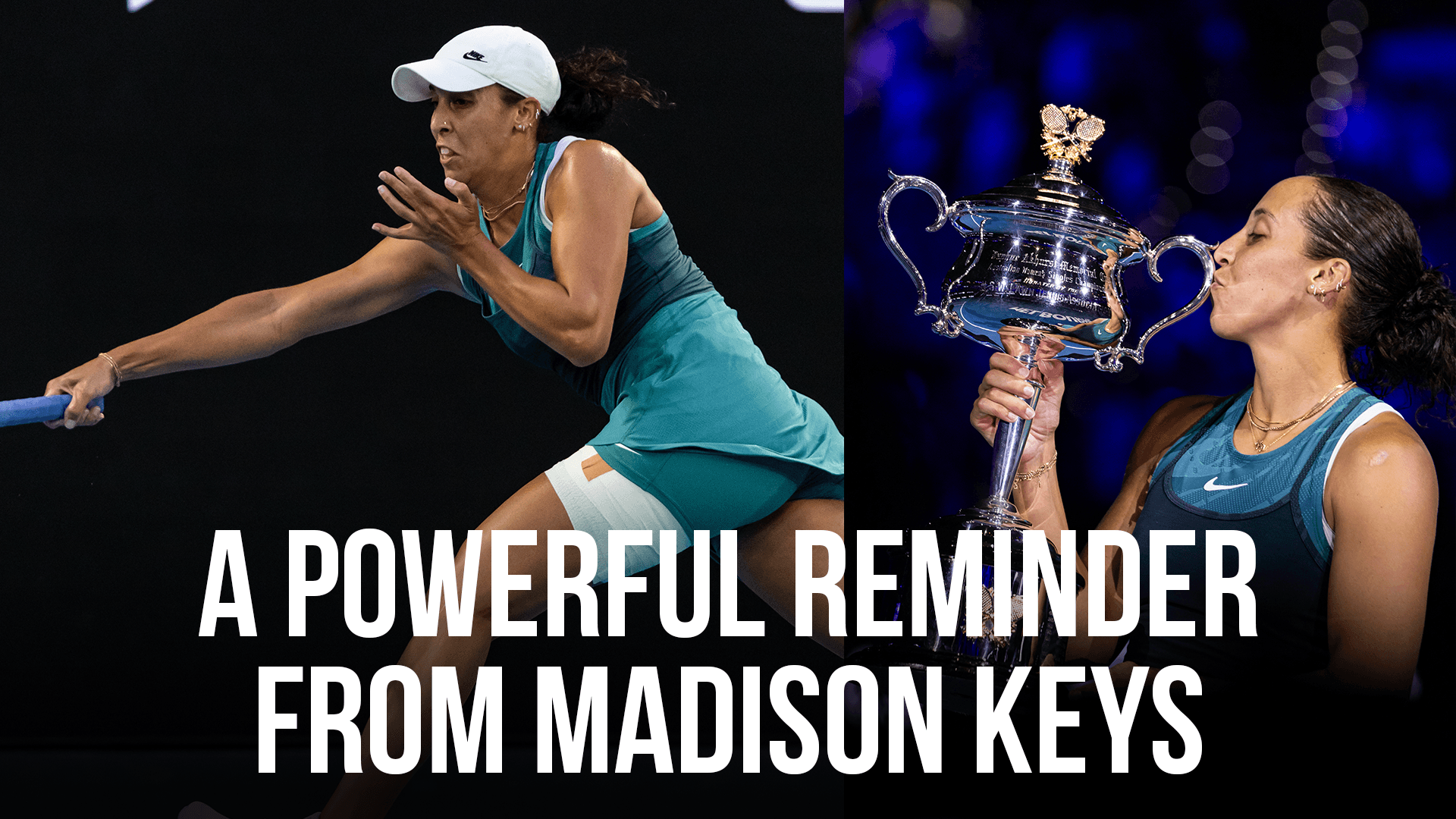


As the 2026 Australian Open kicks off, we’re revisiting defending champion Madison Keys’ post-match press conference, a moment that resonated far beyond tennis.
In the press conference, Keys opened up about her mental health struggles and the therapy she went through to finally reach her potential. What she shared offers an important lesson for parents, coaches and young athletes everywhere: success isn’t just physical. It’s deeply mental.
Her words give us a framework for how to think about pressure, confidence, and growth in youth sports.
Dealing with Pressure
I can be nervous and still play good tennis, like those things can live together.
This simple sentence reframes how we think about nerves. So many young athletes believe that feeling nervous means something is wrong. Keys reminds us that nerves don’t stop you from performing well; they’re a sign that you care.
Kids don’t need to be fearless to succeed. They need to learn that they can play through the fear.
I finally got to the point where I was proud of myself with or without a grand slam.
This shift from an outcome-focused mindset to a process-focused mindset is powerful. In youth sports, kids are often led to believe that their worth is tied to winning. But pride that’s rooted in effort and growth is far more sustainable and enjoyable.
Confidence and Staying Present
Part of it was that I never really got ahead of myself in each round. I never once thought about the next round until I was actually there.
Keys describes another mindset shift that many athletes struggle with: focusing on the present moment. When kids fixate on what the future might bring—like making the team or winning the tournament—the pressure only builds.
At some point it’s really just letting go of the stress of ‘will I ever win one?’ and not really worrying about it and just playing tennis.
Dropping the expectations can go a long way and it’s something that parents can model and reinforce. One way to shift the focus is by asking questions like these:
- “What did you enjoy today?”
- “What did you learn?”
- “What are you proud of?”
Those questions show kids the value process over outcome.
Therapy and Asking for Help
Keys spoke openly about her journey through therapy and how it helped her with “being really honest and actually getting help and actually talking to someone. And not just about tennis but about how I felt about myself.”
She added, “It’s something I will continue to do for the rest of my life and I think if more people talk about it then it just kind of becomes the norm.”
Her honesty tells young athletes that strength isn’t putting on a tough face and pretending everything is fine. She shows that being vulnerable and seeking help may be tough, but they are ultimately a sign of growth, not weakness. When adults normalize these conversations, we create space for healthier, more resilient athletes.
Final Thought
Madison Keys’ story is a reminder that mindset shapes everything.
Young athletes don’t need to be fearless. They need to know they can be nervous and still perform. They need to learn how to be proud of themselves along the way. And they need to know that asking for help is a sign of strength.

GET YOUTH INC UPDATES
Get real tools, fresh perspective, and inspiring stories to help you get the most from youth sports. Plus, you'll be entered for a chance to win premium fan wear to rep your favorite school or club