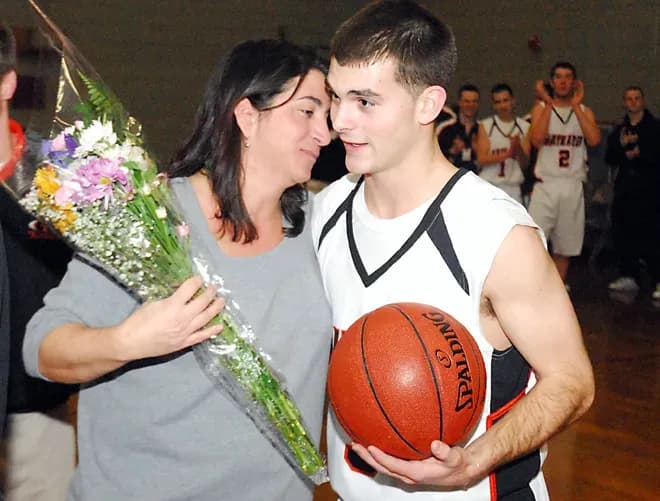


There are a lot of things you grow up believing about your mom.
You know she’s tough. You know she’s loving. You know she somehow makes everything work—rides, schedules, dinners, uniforms, late nights, early mornings. You assume that’s just what moms do. Especially sports moms.
But there’s a moment in some kids’ lives—usually earlier than they expect—when something shifts. When you realize your mom wasn’t just around sports.
She was an athlete.
And when that realization hits, it rewires something in your brain.
Growing up in Maynard, Massachusetts, sports were never optional in our house. My mom raised me and my two siblings in a town she didn’t grow up in, building a life and a community from scratch. She never said no when we wanted to play. High school. Club. Rec. Night leagues. Day camps. New sports, old sports, overlapping seasons. If there was a game, she was there. If there was a banquet, she showed up. If there was a ride needed, she found a way.
The result was three kids who played everything.
Three separate three-sport athletes at different points. Different body types. Different genders. Different levels of success and failure.
Not for nothing, but all three of us eventually played college sports.
At the time, I didn’t think much of it. That was just my mom.
She was supportive. She was giving. And she was tough. Brutally honest, at times. You could come home after the best game of your life and still hear about the one turnover you had in the second quarter. There was always room for improvement in her eyes—and somehow, that never felt cruel.
What I didn’t fully understand—what I couldn’t fully understand as a kid—was why she saw the game the way she did.
That didn’t really click until the Clark Tournament in 2008. One of Massachusetts' premier high school hoops tournaments, and the first time I'd be exposed to the 'bright lights' of real basketball.
I was a sophomore at Maynard High, starting in one of the biggest games of my young career. I had the game of my life to that point, 21 points, 7 assissts, 7 rebounds, and 5 steals.
Once the game ended, I was ushered upstairs to answer some questions from the press. Then, the incredible happened... a writer from the Worcester Telegram started telling me stories—about my mom.
About how she played. About how good she really was. About how familiar my game looked.
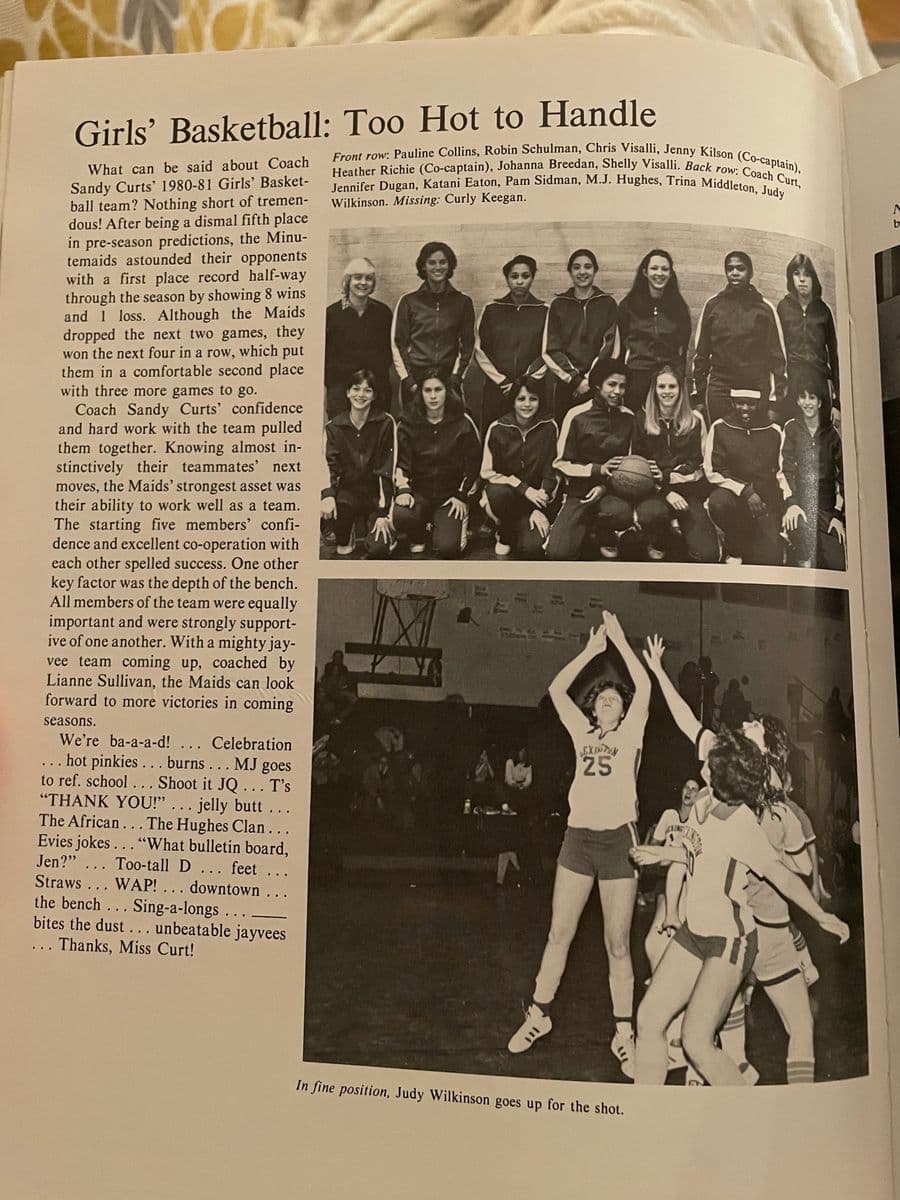
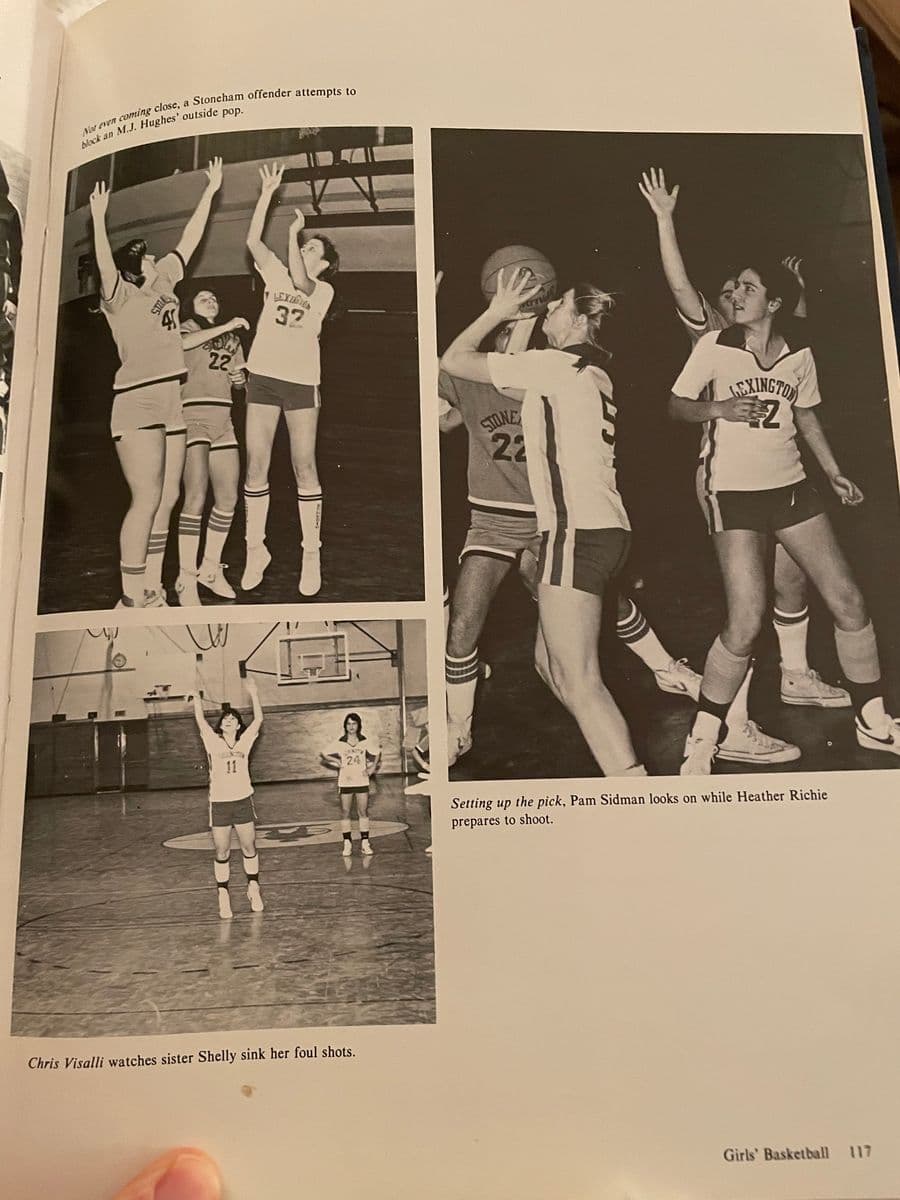
He wrote, in an article displayed prominently in my home now, "Twenty-five years earlier, the former Shelly Visalli had skinned her knees diving for loose balls, whipped no-look passes, and helped lift Lexington High to its only Division 1 North championship." (You can read the whole article here)
She went on to play at Merrimack College. She was the kind of player who didn’t get rattled. The kind who set the tone. The kind people remembered decades later.
I had no idea.
Hearing those stories knocked me back. Suddenly, all the things I’d accepted as “mom behavior” made sense. The details she noticed. The standards she held. The way she understood flow, effort, toughness, and accountability. She wasn’t just watching the game.
She knew the game. Much better than I did.
And in that moment, my mom turned into a superhero.
Not in the abstract, little-kid way where parents feel larger than life because you’re small—but in a grounded, awe-filled way. A way that makes you realize the person who raised you once chased excellence themselves. That they bled for something. That they competed. That they earned respect in rooms you hadn’t even imagined yet.
It changes how you see your mom.
And if you’re paying attention, it changes how you see women.
I’m writing this during National Girls & Women in Sports Day because this perspective feels worth sharing. I’m not sure I’ve ever read a first-hand account of a young man realizing—mid-journey—that his mom was a legitimate, high-level athlete, and what that realization does to your understanding of the world.
For me, it added depth. It added context to the person my mom was.
I stopped seeing my mom as just the person who showed up for my dreams. I saw her as someone who once chased her own—and then chose to help three kids chase theirs instead.
That’s a formative thing for a kid. Especially a young man.
It teaches you that strength isn’t loud. That leadership doesn’t always look like scoring the most points. That the people who shape you the most might be carrying entire histories you haven’t bothered to ask about yet.
My mom was at every game. Every banquet. Every long night and early morning. She gave endlessly. She demanded honesty and effort. She pushed us without ever making sports about her.
And all the while, she was doing it as someone who had already been there.
Someone who knew exactly how hard it was.
Someone who could still beat me one-on-one.
If we care about youth sports—if we care about building healthy perspectives around competition, identity, and respect—then these stories matter. Not just the highlight reels, but the quiet realizations. The moments when kids learn that greatness doesn’t always announce itself.
Sometimes it’s driving the car.
Sometimes it’s pointing out the turnover.
Sometimes it’s your mom.
And the day you find out she was an athlete is the day the world gets a little bigger—and a lot more interesting.

GET YOUTH INC UPDATES
Get real tools, fresh perspective, and inspiring stories to help you get the most from youth sports. Plus, you'll be entered for a chance to win premium fan wear to rep your favorite school or club