
In October of 2023, my friend Kevin Dalafu and I agreed to begin writing Guiding Your Child’s Athletic Journey. Fast forward a little over a year to late 2024, and we felt really good about what we had created. The chapters were solid. The ideas were clear. The research supported what we were saying. And yet, something still felt incomplete.
We could not quite put our finger on it at first. But in one of our meetings, it finally clicked.
VALUES.
It all starts with values.
All families have their own values, many of them overlapping with other families. But there are certain things that each family emphasizes as being of primary importance. The challenge is that a lot of us parents never clearly define what those are.
Who are we as a family? What do we stand for? What are our non-negotiables, and where do we still allow room to grow?
We cannot emphasize everything all the time, as much as we might want to. But we do get to choose which values matter most, and we get to emphasize those consistently.
That realization changed the way I look at youth sports.
In my last blog, I mentioned a family who stood out during a game because of how they handled moments of emotion with their son.
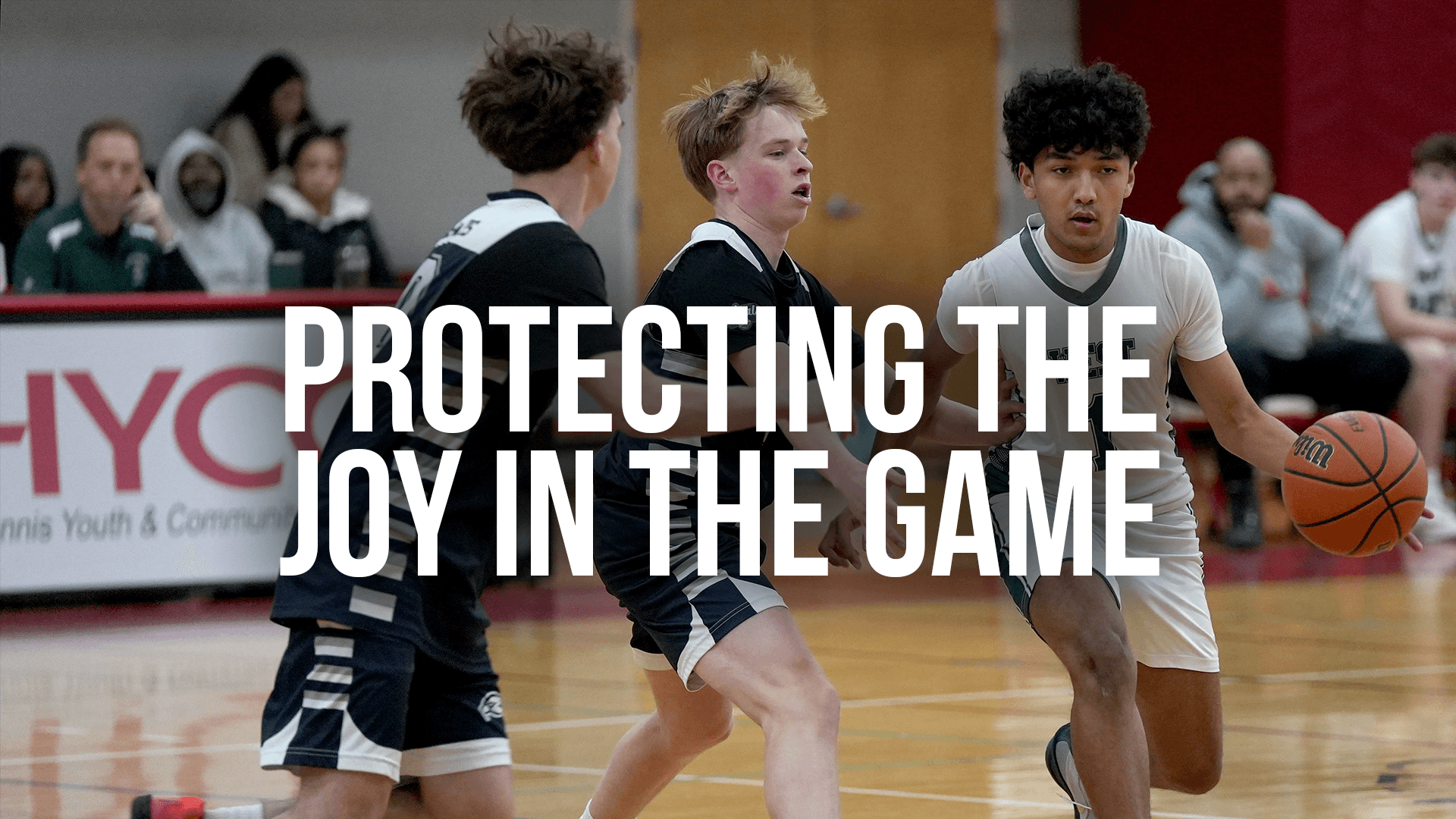
One of those moments came when their son attacked the basket hard. He took the contact and scored right in front of the baseline bleachers most of us parents were sitting in. A couple of parents nearby said loudly that it was not a foul. He was close enough to hear them. When he heard the complaining parents, he turned toward them and made a face.
His parents were sitting in those same baseline bleachers. They did not raise their voices. They did not coach. They simply said his name loud enough for him to hear. He immediately turned away and got back into the game.
What stood out was not just the correction, but the effect it had. It pulled him back into the moment. It helped him reset emotionally. And it reinforced, in real time, the values his parents clearly cared about.
Most of us parents want to help. Whether your child is just starting out in elementary school or nearing the end of high school, that instinct remains the same. We want our kids to improve. We want to support them. And in the gym, where emotions and energy run high, it is easy to react to whatever feels urgent in the moment.
Missed assignments. Bad shots. Turnovers. Referee calls. All of it can feel urgent in the moment.
Without clarity on our values, we often end up correcting whatever is loudest.
When values are clear, our responses tend to change. We do not feel the need to address everything. We can let many things go, because we know what we are actually watching for.
Are we paying attention to effort and body language? To how our kids respond to adversity? To how they treat teammates, officials, and opponents?
Those priorities shape what we choose to correct and what we choose to ignore.
And our kids notice.
They notice what draws our attention.
They notice what gets addressed.
They notice what seems to matter most to us.
Over time, those patterns teach lessons far deeper than any single comment ever could.
Reflection Question
When your child looks to the stands after a mistake, what do you want them to be checking for?
Practical Tip
Before the season starts, identify two or three values that matter most to your family. Let those guide what you choose to address during games.

GET YOUTH INC UPDATES
Get real tools, fresh perspective, and inspiring stories to help you get the most from youth sports. Plus, you'll be entered for a chance to win premium fan wear to rep your favorite school or club